Monday, October 29, 2012

The Power of Conservation: Today's Actions, Tomorrow's Rewards


The Power of Conservation. We use this phrase frequently in the soil and water arena.

The simple act of conserving our natural resources is, in my mind, a very powerful daily job that Soil and Water Conservation Districts and our Indiana Conservation Partners are deeply committed to.

It is an act that each one of us hopefully does every day in some way, whether we live on a farm, in a large urban environment, or a small town.


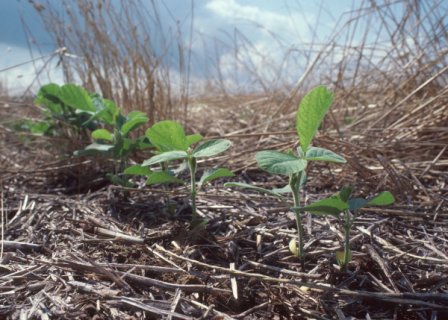
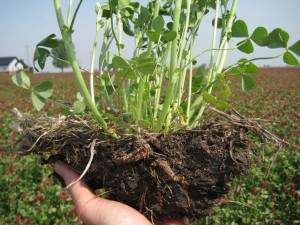
Right now that power of conservation can be seen in action across Indiana farm fields as cover crops are taking hold, setting deep roots into our Hoosier soils. Cover crops, that will protect the soil over the winter, provide rich nutrients and fertilizers for spring crops while improving and preparing the soil for spring planting.

The power of conservation is visible in neighborhoods all over Indiana on any given day as recycling bins are set curbside for trash pickup, or as leaves and other fall garden debris are collected and composted.

The rewards are forthcoming. Some are in the short-term. Many will be seen years down the road. We all have a stake in today's actions, because they affect tomorrow's rewards.

If you are committed to our soil and water resources, join us January 7-9, 2013, for The Power of Conservation: Today's Actions, Tomorrow's Rewards. It is the 70th Annual Conference of Indiana Soil and Water Conservation Districts at the Indianapolis Downtown Marriott.

You'll find 12 excellent hands-on training sessions, keynote speakers, and exhibitors designed to provide you with the tools you'll need for The Power of Conservation: Today's actions, Tomorrow's Rewards.

Register today!

Monday, October 15, 2012

Guest Post: Drought Provides Opportunities to Improve Soil Health

Guest post contributed by Joe Kelsay, Indiana Agriculture Director and owner of Kelsay Farms

This year's historical drought has provided a prime opportunity for a special focus on a most precious resource, our soil. Though we tend to think first of the extreme weather's effect on our 2012 crop yields, its impact on feed supplies and the health of our fields could easily extend the damage into next season and well beyond. ISDA encourages our farmers to minimize this impact by spending some time this fall considering their opportunities to improve soil health.

One way to address soil health and make the most of these conditions is through the establishment of cover crops like oats, clover, rye grasses, and/or radishes. These can provide emergency forage, reduce soil loss, scavenge precious nutrients, improve water quality, offer wildlife habitat and rehabilitate pastures, all while developing soil health at the same time.

Cover crops improve soil health by creating more organic matter in the ground and increasing water-holding capacity. They help to reduce soil compaction and erosion, and can ultimately suppress weed pressure while increasing the yields of subsequent crops. They can also provide critical forage for grazing, chopping or haying at a time when livestock producers everywhere are facing cost-related challenges and having to reassess how to manage feed sources for their animals.

As evidence to the interest in cover crop benefits from our farmers, we witnessed overwhelming response to emergency cover crop cost share assistance from recent announcements of federal and state programs. In spite of the fact that the interest from Indiana landowners proved to be much greater than the availability of funds, many landowners are choosing to continue with these conservation efforts on their own. There are a host of resources that can assist these efforts, including the Conservation Cropping Systems Initiative (CCSI), Purdue University Extension, the Natural Resources Conservation Service (NRCS), Soil and Water Conservation Districts (SWCD's) Certified Crop Advisors (CCA's) and numerous online chats, blogs and message boards, just to name a few.

Much time will be invested in the recovery from this year's drought, and we will find solutions to minimize the challenges of 2012, with a deliberate focus on improving our soil. Many different avenues can offer help, arming producers with the essential tools they need to get to the best position for the future.  What is most exciting is that Indiana has proven over and over again that by focusing on our strengths and constantly innovating, especially in difficult times, we continue to propel Indiana Agriculture forward.

Tuesday, October 9, 2012

Why Weren't We No-Tilling Until Now?

Excerpted from an interview with Conservation Cropping Systems Initiative coordinator Hans Kok:

Q: When did we determine no-till was better?

The 1960s. We didn't have the technology . . . it's that simple. We couldn't seed in the ground with this much trash or residue on the surface and we couldn't control the weeds. That's why we were doing tillage. It's not that we were doing things so wrong, it's that we were using 1700's technology. We've progressed, but it always takes a long time for new technology to be adopted.

Now in other places in the world, they've adopted no-till like crazy. Australia, New Zealand, Argentina, Brazil ... they are almost entirely no-till out there, so they've taken the technology, they've seen the value of it, they money it saves the farmers to go no-till and realizing we have the tools. But here in the States, we've been slow to adopt it, and in Europe it has been even slower.

But with something like this educational tool (the rain simulator) it shows what happens the value of no-till. It wakes a lot of people up. A farmer came up to me in Kansas and said he saw my rain simulation a couple of years ago and started thinking about it what we were doing to the land and switched the whole farm over to no-till. I've yet to meet a farmer, topography or soil type or climate where we can't no-till.


Tuesday, August 14, 2012

Destroying Crops? Don't Till!

Many crops have been lost this year due to the drought. For those farmers who have crop insurance, they may consider destroying the crop or putting what remains to alternative uses, such as harvesting it as silage or feed. Before crops are destroyed, an insurance agent needs to verify that the crop was indeed lost.

But how does one destroy a crop without harming the land underneath it, and while keeping an eye to the future? A common misconception among farmers and insurance agent is that tillage is necessary to destroy a crop. However, tilling your land can have very harmful effects that will last longer than this season, as dry as it is. 

Consider the destruction tillage would cause to the soil's health; nutrients left unused by the crop will run off and drastically reduce water quality; the increase in erosion due to exposed soil; and that any remaining moisture would evaporate quickly from tilled fields.

The Risk Management Agency has clarified that tilling is not required to destroy a crop. Instead, consider using it for pasture, bush hog, set it for silage, etc. Corn stalks with ears yet on them can be left standing as forage. 

Additionally, growers who have nothing to harvest this season can consider planting a cover crop that also serves as forage. The forage could then be used or sold to a neighbor.

Remember - "Destroy" Does Not Mean "Till"

Thursday, July 26, 2012

Cover Crops: Good for Forage, Too!

This year's drought is especially hard on livestock - there's not much growing for them to munch on. Today we learned that sixty-four Indiana counties are now "primary natural disaster areas" due to the lack of rain, and Conservation Reserve and Wetland Reserve acreage has been opened up for emergency forage and haying.

However, according to Dave Robison at PlantCoverCrops.com, "Harvesting cover crops for emergency fall forage may be able to play a major role in lessening the impact of the 2012 drought disaster for livestock producers."

His article is copied in part here; you can read the full version here.
"I have received phone call after phone call from dairy and beef producers asking what cover crops they can use to provide food for their animals this fall and winter. Below I have listed a variety of choices that may work well for producers needing feed (if we get rain). By the way, these choices are also excellent cover crops."

Dave recommends these crops for forage:
  • Sudangrass or Sorghum X Sudangrass
  • Spring Oats/Spring Triticale
  • Oats and Crimson Clover
  • Oats and Cereal Rye (or Winter Triticale)
  • Oats (or Spring Triticale) and Peas (Forage or Austrian Winter Peas)
  • Annual Ryegrass/Annual Ryegrass – Crimson Clover Mix or Italian Ryegrass
  • Spring or Winter Barley

Wednesday, July 11, 2012

Hot, Dry, and Difficult

Drought-stressed corn in Terre Haute, IN.
Photo source.
Drought: "a period of dryness especially when prolonged; specifically one that causes extensive damage to crops or prevents their successful growth" (Merriam Webster). 

As of last week, Indiana is officially the most affected by this year's drought, out of all the corn- and soy-producing states.

The central part of the state may even face mandatory water restrictions, something that naturally-dry states like Arizona are familiar with but are almost unheard of here in normally water-rich Hoosier country. Most of a recent spike in water usage is due to homeowners watering their lawns.

Farmers are seeing the results of all their planning and preparation turn not green, but brown and yellow.

Though this year may end up as a loss in the books, it's far from time to throw in the towel. This year is one that will test us and provide us with valuable information & experience for any future difficult years.

NRCS and the Purdue Extension have compiled some very timely and useful websites for those looking for advice and information. 

For farmers, consider this "silver lining:" Remaining nutrients in the soil can be captured for use next year. Purdue scientists and NRCS agronomists agree that most of the nitrogen (a commonly-applied fertilizer) will not be used by the crops this year. As such, it is wise to consider planting a cover crop, which will store the residual nitrogen for future use.

For homeowners, remember to water your lawn and gardens when the sun isn't shining, at most once per week, and consider setting out a bowl of water for thirsty neighborhood wildlife and pets.

Wednesday, June 20, 2012

Walk the Path that Water Walks

Pathway to Water Quality (PWQ) is a model watershed showing how land "sheds" water, or drains to a common place such as a river, lake or stream. We all live in a watershed and what we do each day impacts our soil and water quality.

Is soil an important ingredient in your every day life? The answer is yes, and here are a few reasons why:

  • Last night you slept in a building built on soil.

  • You drink water that flows through soil and is cleaned by the soil.

  • You breathe air that comes from plants growing in the soil.

  • You even wear clothes made from plants that grow in the soil.

Pathway's education area offers great conservation
activities for youth and the young at heart.
Soils make our lives possible. We also play on soil, drive on soil, eat food grown in or raised on soil, and take medicines from soil. The entire earth — every ecosystem, every living organism — is dependent upon soils.

Did you know one teaspoon of soil contains more living organisms than all the known kinds of plants on earth? Creatures like mammals, reptiles, amphibians, worms, insects, spiders, centipedes, mites, nematodes, plants, fungi, bacteria and microbes — all help keep the soil healthy and rich for crops, gardens, wildlife, food, and people.

Pathway to Water Quality exists to show the connection between healthy soils and clean water, why it is important, and what we can do at home and on the farm to protect our soil and water quality !

For more information on PWQ visit our website at
www.pathwaytowaterquality.org.